
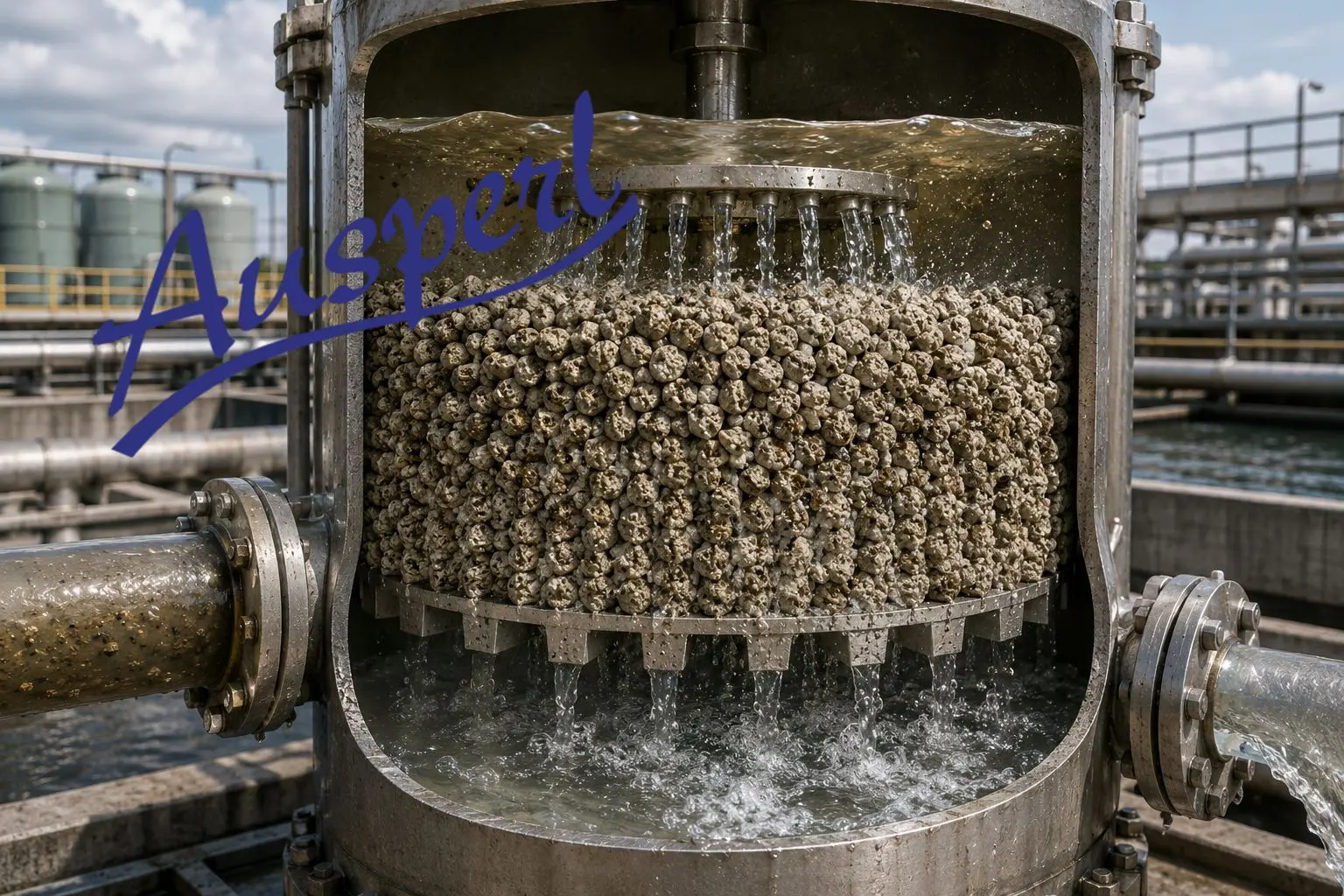
Granular media filters are used throughout water treatment to remove suspended solids and improve water quality. Their performance depends on the hydraulic and physical characteristics of the filter bed, including particle size, density, porosity, bed depth and backwash behaviour. Pumice is a naturally porous volcanic rock that can provide a useful combination of low specific gravity, hardness and effective surface area. When washed, screened and correctly graded, pumice can be used as an alternative filter medium in irrigation, municipal and other water-treatment applications. Selecting pumice is not simply a direct material substitution. The complete filter must be designed or assessed around the chosen media and the required treatment duty.

What Is Pumice?

Pumice is a light, siliceous, vesicular volcanic rock formed when gas-rich molten material cools rapidly. Escaping gases create a network of pores within the solidifying rock, producing its characteristic low density and high porosity. Unlike expanded perlite or exfoliated vermiculite, pumice already possesses its porous structure in nature and does not require a thermal expansion step to create it.

Ausperl’s Atiamuri pumice is sourced from a land-based resource near Lake Taupo in New Zealand. It is characterised by relative hardness and low weight compared with many conventional aggregates. Washing and screening are used to produce controlled grades and remove unwanted fine particles.

How Does Granular Filtration Work?

Water passes through a bed of graded particles while suspended material is retained within and between the media grains. Removal can occur through several mechanisms, including straining, interception and attachment to media surfaces. As solids accumulate, resistance through the bed increases and the pressure loss rises. The filter is then backwashed. Upward water flow expands and agitates the bed, releasing accumulated solids before the media settles back into place for the next filtration cycle. Media density, size and shape therefore influence both filtration and cleaning performance.

High Porosity and Effective Surface Area

The vesicular structure of pumice creates numerous pores and an irregular particle surface.This can provide a relatively large effective surface area compared with smooth, dense media. In suitable filters, the surface and inter-particle spaces support capture of suspended solids throughout the bed.The practical result depends on the selected grade and the characteristics of the influent water. Fine particles may improve retention but increase hydraulic resistance, while coarser particles generally favour flow at the expense of finer solids capture.

Lower Specific Gravity

Pumice has a lower specific gravity than conventional silica sand because of its internal pore structure. This difference influences how the media behaves during backwashing. A lighter bed can expand at a lower upward velocity than a denser sand bed of comparable particle size. Potential advantages can include less intensive backwash requirements, improved bed expansion and reduced pumping energy. These benefits are system-specific and should be confirmed using the actual media grading, water temperature and filter geometry.

Filtration Rate and Hydraulic Performance

An effective filter medium must provide sufficient solids removal without creating excessive head loss. Correctly graded pumice can form an open filter bed that supports useful filtration rates. Its combination of porosity and particle structure may allow the bed to retain solids while maintaining hydraulic performance over the operating cycle. As with any media, filtration velocity should be selected according to influent quality, target effluent quality and the available filter depth. Higher velocity is not automatically better if it shortens run time or allows solids breakthrough.

Backwashing and Bed Expansion

Backwashing must expand the bed enough to release retained solids without carrying valuable filter media out of the vessel. Because pumice is lighter than sand, existing backwash settings may need adjustment when a filter is converted. Excessive backwash velocity could cause media loss, while insufficient expansion may leave accumulated solids in the bed. Designers should evaluate fluidisation velocity, freeboard, wash-water flow, water temperature and any air-scour sequence before commissioning the system.

Media Handling and Refurbishment

The lower density of pumice can make filter-media handling less demanding by weight when beds are filled, inspected or replaced. For refurbishment projects, washed and screened pumice may offer a practical way to renew media without introducing a high concentration of fines. Removing fines is important because they can increase initial turbidity, affect pressure loss and alter backwash behaviour. Appropriate site procedures, respiratory protection and dust control should still be used when handling dry mineral products.

Where Can Pumice Filter Media Be Used?

Pumice can be considered in several granular-filtration duties, including irrigation-water treatment, municipal water filtration, process-water treatment and selected wastewater-polishing applications. Its suitability depends on the required contaminant removal and the upstream and downstream treatment stages. Granular pumice alone is not intended to remove every dissolved contaminant or provide disinfection. Pilot testing or controlled plant trials can be valuable when feed-water quality varies or when pumice is replacing a different media in existing equipment.

Selecting the Right Pumice Grade

Particle-size distribution is one of the most important media specifications. Designers should consider effective size, uniformity, media density, hardness, bed depth and compatibility with support layers and underdrains. The selected grade must also remain within the filter during backwashing. Consistent washing and screening help reduce fines and provide more predictable hydraulic behaviour from batch to batch. Before selection, the supplier and system designer should review the raw-water solids, filtration velocity, target pressure loss, desired run length, backwash capacity and available freeboard.

Beyond Water Filtration

Pumice is a versatile industrial mineral. Its low density and hardness make it useful as a lightweight aggregate in blocks, precast drainage units and emplaced concrete. Its porosity also supports horticultural and hydroponic growing media, where it helps maintain drainage and air spaces around roots. When milled to controlled particle sizes, pumice can provide mild abrasive action in cleaning, polishing and specialty formulations. The correct grade for one application should not be assumed suitable for another. Particle size, cleanliness and physical properties must be matched to the intended use.

Why Choose Ausperl Pumice?

Ausperl supplies pumice sourced and processed in New Zealand for filtration, horticulture, concrete and industrial applications. For filtration duties, the material is washed and screened to provide controlled grades without unwanted fine particles. Ausperl works with customers to understand their equipment, water quality and operating objectives before identifying a suitable product. This application-based approach is important because media performance results from the interaction between the pumice and the complete filtration system.

Conclusion

Pumice filter media combines natural porosity, relatively low specific gravity and a hard mineral structure. These characteristics can support effective solids capture, useful filtration rates, improved bed expansion and less intensive backwashing in correctly designed water-treatment systems. Performance nevertheless depends on particle grading, bed depth, filtration velocity, raw-water quality and backwash conditions. Careful selection and validation are therefore essential when specifying pumice for a new filter or refurbishing an existing bed. If you are evaluating pumice for water treatment, contact Ausperl to discuss the most appropriate grade for your filtration process.

We would love to hear from you

Click below to get in touch with our friendly and experienced team.

Get In Touch

Australia

Tel: +61 2 8318 7824
Email: [email protected]

New Zealand

Tel: +64 9 810 9627
Email: [email protected]

Quarry

Tel: +64 9 810 9627
Email: [email protected]

Spain

Tel: +34 633 066 006
Email: [email protected]

USA

Tel: +1 208 262 5358
Email: [email protected]

Thailand

Tel: +66 85 302 9621
Email: [email protected]

Copyright © 2025 Ausperl Pty Ltd  /  Website by Fuel Media Ltd.